
Built to Last

by Shannon Garrison
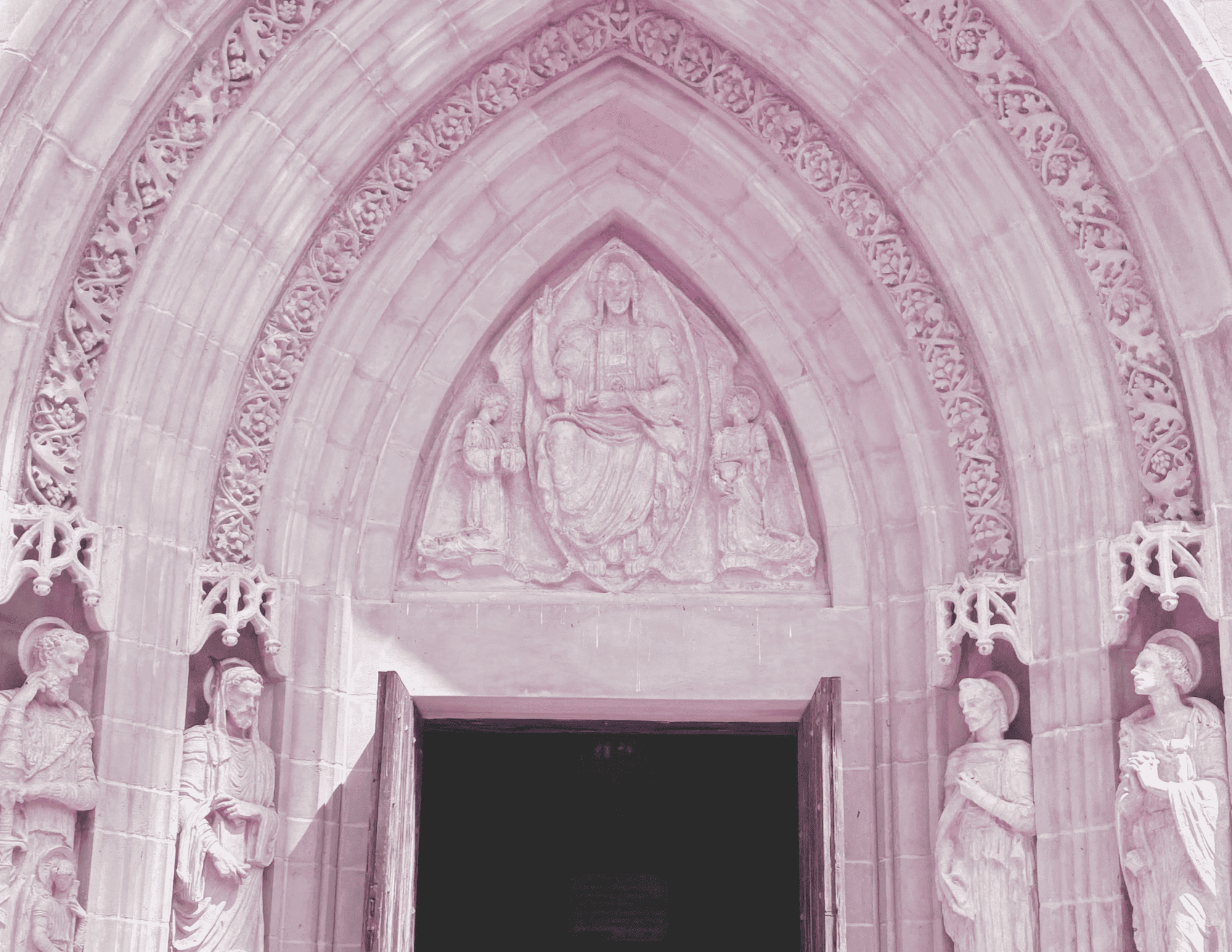
I love historic churches. There is something awe-inspiring and majestic about them—the chiseled stone details, grand doors, colorful stained-glass windows, high ceilings, intricately painted murals, elaborate tapestries, carved wooden altars, ornately bound Bibles and hymnals, and soft, glowing candlelight.
As I admire the design, architecture, and construction, I am amazed by humanity’s capacity to produce such beauty and give such attention to detail. Yet while man may do the physical work, I am reminded that our ability ultimately comes from God. As the Author and Creator, He gives the wisdom, vision, and skill to bring our work to life.
The truth is, our God-given abilities are meant to reflect His creativity, power, design, and purposes—not draw attention to our own abilities or self-sufficiency.
Yet how often do we forget God amid our accomplishments and take the credit for what He enabled us to do? Success can lead us to strive for something greater, believing there is no limit to what we can accomplish or produce on our own, which ultimately leads us away from God’s desires and purposes.
Consider the Tower of Babel:
They said, “Come, let us build a city for ourselves, and a tower whose top will reach into the heavens, and let us make a [famous] name for ourselves, so that we will not be scattered [into separate groups] and be dispersed over the surface of the entire earth [as the Lord instructed].”
(Genesis 11:4, AMP)
The people became prideful and rebellious, believing they could accomplish great things apart from God. This false belief was reflected in their work as they built a city and tower to make a name for themselves while resisting God’s command to fill the earth. Consequently, God disrupted their plans by confusing their language and scattering them across the earth. They accomplished a great feat, yet their success did not signify God’s approval. As a result, God disrupted their work and fulfilled His purposes nonetheless.
Scripture reminds us of God’s desire and order when it comes to our work:
Unless the LORD builds the house, those who build it labor in vain.
(Psalm 127:1, ESV)
The tendency to “build” apart from God is seen throughout history, even today—as people attempt to bypass God’s design and purposes while taking credit for what ultimately belongs to Him. We even see this happening in the modern-day church. People make their own plans and pursue their own desires, playing God while still expecting His stamp of approval.
But whether in the church or in the world, if God isn’t the Author of the blueprint, our labor is vain. Earthly success does not equal divine approval, and what we build apart from Him cannot produce the lasting Kingdom fruit He desires.
The word translated “build” throughout the Old Testament is often the Hebrew word banah. It signifies building, rebuilding, repairing, or establishing something.¹ At times, banah describes work God initiated and approved—God forming woman from man, the building of altars as acts of worship, the building or rebuilding of cities, the restoration of His people after exile, the establishment of a family dynasty, and the building of the temple.
Throughout Scripture, we see a pattern: When God leads the building process, He initiates the work, provides the blueprint, equips the builders, empowers them to complete the assignment, fulfills His redemptive purposes, and ultimately receives the glory!
However, banah is also used in Scripture to describe what people built, repaired, or established outside of God’s design—counterfeit construction, as we see at Babel. We see people attempting to produce a promised heir through ungodly means, building cities contrary to God’s purposes, and constructing high places for idol worship.
Through these ungodly examples, we see a contrasting pattern: When we build apart from God, we build according to our desires, our wisdom, our strength, and our plans for our own glory—and the consequences can be disastrous.
Take note: Counterfeit construction begins with our ideas and asks God to bless them. Godly construction begins with God’s plan, and He invites us to participate in it.
And while our motives may not always be easily discerned by those around us, God sees our hearts, knows our intentions, and tests our work:
Using the gift that God gave me, I did the work of an expert builder and laid the foundation, and someone else is building on it. But each of you must be careful how you build. For God has already placed Jesus Christ as the one and only foundation, and no other foundation can be laid. Some will use gold or silver or precious stones in building on the foundation; others will use wood or grass or straw. And the quality of each person’s work will be seen when the Day of Christ exposes it. For on that Day fire will reveal everyone’s work; the fire will test it and show its real quality.
(1 Corinthians 3:10–13, GNT)
Outwardly, our work can appear successful. We can build beautiful things that seem to benefit us and others and may even appear godly. Even the magnificent churches I admire can be filled with intricate details and religious symbolism, yet be void of God’s power if the people building and leading them are not following His design. A structure can bear God’s name while the work taking place within it fails to reflect His heart and purposes.
Thus, the beauty of what we build ultimately reflects the Creator who gave us the capacity to create, but beauty alone does not prove God’s presence or approval. Only when God tests our work are its motives exposed and its true quality revealed.
At the end of the day, if the foundation of what we build is anything other than Christ, we have missed the mark. What we build from selfish motives and in our own strength will not withstand the test. Like Babel, our work will ultimately be exposed for what it is. What originates with us cannot override God’s purposes or accomplish what only He can do. Therefore, He will often disrupt our plans and redirect us according to His redemptive purposes.
Friend, God desires to use you for His Kingdom and to accomplish His will. He is inviting you to partner with Him in your work. What you build matters, and He desires to be the Author of the blueprint for whatever He has called you to put your hands to.
Pray and invite the Holy Spirit to search your heart, and then ask yourself:
What am I currently building?
You may not be building a physical structure, but we are all building something. And our motives can either align with God’s purposes or be driven by our flesh.
Whether you’re building a reputation, a platform, an empire, a life, a future, a legacy, security, an identity, a family, wealth, a ministry, or a career, consider:
Am I building for God’s Kingdom and partnering with Him in His redemptive purposes?
Who authored the blueprint for what I am building?
Will what I am building bring glory to God and produce fruit for His Kingdom?
Or is it self-serving, ultimately bringing glory to myself and leading me away from God’s plan?
Use the contrasting ways of building in Scripture to examine your own motives:
Building God’s Way
I build…
- for God’s glory
- as worship to God
- according to His redemptive purposes
- according to His commands
- what God has assigned
- according to God’s promises
- through godly wisdom
- through dependence on God
- to build up God’s people
- as an act of restoration
Counterfeit Construction
I build…
- for self-glory
- as false worship
- from fleshly motives—envy, insecurity, pressure, fear, pride, manipulation, control, or rebellion
- what God has prohibited
- what God never commanded
- according to God’s promises, but I do it my own way
- through injustice
- to create security apart from God
- what God has determined to tear down
We must never forget: What we build apart from God is temporary. What God builds has eternal value—it is built to last.
Therefore, we must let God lead the process of whatever He has called us to build and stop trying to accomplish what only He can do as the Designer, Architect, and Builder of our faith. When we surrender our plans to God and build according to His blueprint, our work can produce lasting Kingdom fruit—for our good, the good of others, the advancement of His Kingdom, and His glory.
Lord, have Your way!
1https://biblehub.com/hebrew/1129.htm
Scripture quotations marked (AMP) are taken from the Amplified® Bible (AMP), Copyright © 2015 by The Lockman Foundation. Used by permission. www.Lockman.org
Scripture quotations marked (ESV) are from the ESV® Bible (The Holy Bible, English Standard Version®), © 2001 by Crossway, a publishing ministry of Good News Publishers. ESV Text Edition: 2025. The ESV text may not be quoted in any publication made available to the public by a Creative Commons license. The ESV may not be translated in whole or in part into any other language. Used by permission. All rights reserved.
Scripture quotations marked (GNT) are from the Good News Translation in Today’s English Version – Second Edition Copyright © 1992 by American Bible Society. Used by Permission.
GOOD NEWS TRANSLATION™ is a trademark of the American Bible Society and may be used only under license.
Be the first to comment